Sicawit
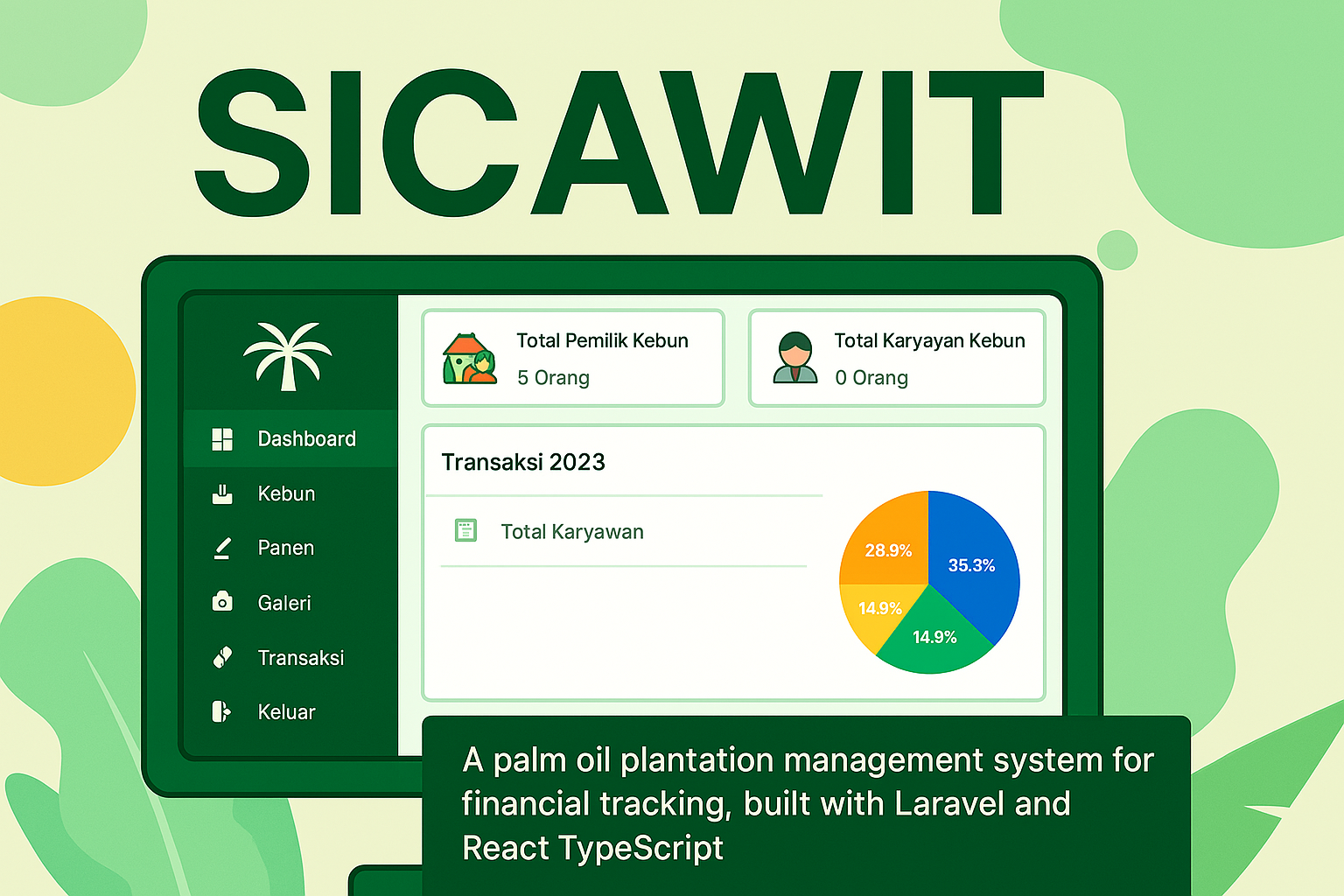
A palm oil plantation management system for financial tracking, built with Laravel and React TypeScript.
Industrial ERP (Internal Tool)
This system was commissioned by a mid-sized agricultural firm in Kalimantan. Due to strict Non-Disclosure Agreements (NDA) regarding their operational data and financial metrics, the source code and live demo are private. However, this case study outlines the real-world architectural challenges of digitizing a physical plantation.
The Complexity of Agriculture
Managing a Palm Oil plantation is surprisingly similar to managing a factory, but with more variables. You deal with harvest cycles, localized weather patterns, fertilizer inventory decay, truck logistics, and fluctuating commodity prices. Before this system, the client tracked everything in disjointed Excel sheets, leading to massive financial leaks and theft that couldn't be detected for months.
System Architecture
We designed Sicawit to be the "Operating System" for the plantation, creating a single source of truth.
- Hectare-Level Granularity: We track costs down to the individual block. We can tell you exactly how many kilograms of fertilizer Block A used versus Block B, and correlate that with their harvest yield. This exposes inefficiencies in soil management.
- Harvest & Yield Forecasting: Using historical data, the system models expected yield curves. This allows the logistics manager to rent the correct number of transport trucks weeks in advance, optimizing OpEx.
- Real-time P&L Dashboard: The owner no longer waits for "End of Month" reports. A dashboard aggregates data from mobile field inputs to show a daily Profit & Loss statement, allowing for immediate course correction on spending.